What Mata v. Avianca teaches about AI for law firms
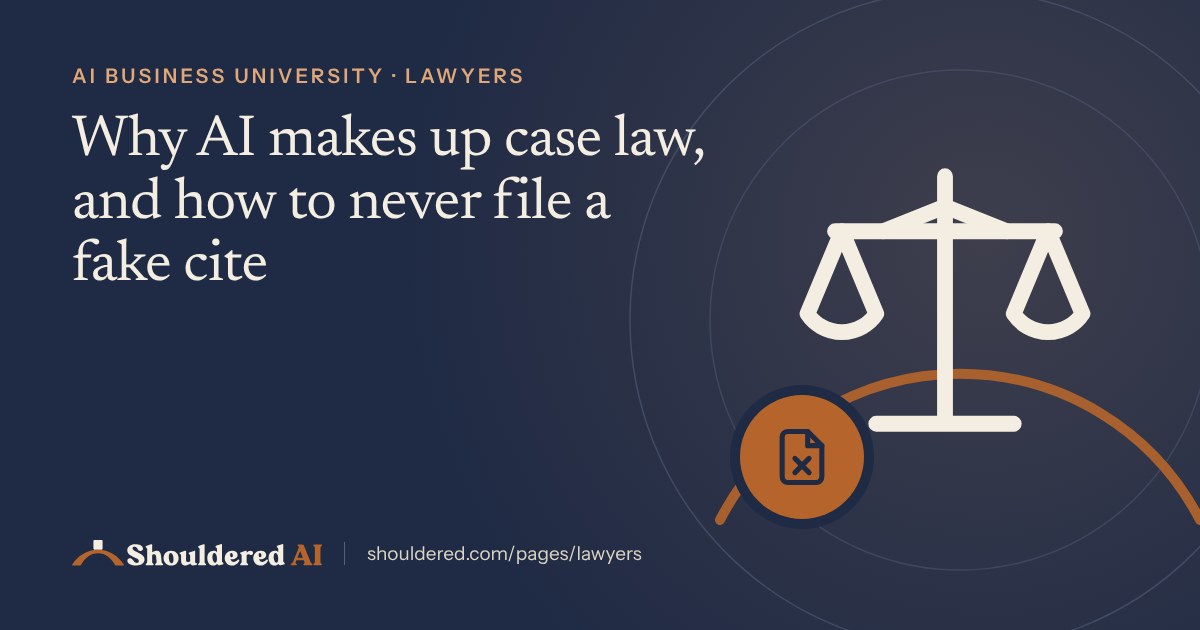
In 2023 a New York lawyer filed a brief against an airline that cited several cases that did not exist. He had asked ChatGPT to find cases, and it gave him party names, citations and quotes that looked exactly right. When opposing counsel could not find them, he asked the tool if the cases were real. It said yes.
Judge P. Kevin Castel found that the lawyers acted in bad faith by standing behind the fake cases after being warned, and fined them $5,000. Their names are now the first thing anyone finds when they search for AI and legal ethics. Since then, courts have sanctioned many more lawyers for the same mistake, including at large firms, with fines, bar referrals and mandatory CLE.
If you are weighing AI for small law firms, start with this story. This article is general information, not legal advice, and bar rules differ by state. Check your own state's guidance and your court's local rules.
Why the tool makes things up
A general chat tool does not look anything up. It predicts the next word from patterns in what it has read, and it has read enough legal writing to know exactly what a citation looks like. Ask for a case that supports your argument and it will produce one in the right shape, whether or not that case exists.
The smaller errors are harder to spot: a real case quoted with words that are not in the opinion, cited for the wrong holding, or reversed on appeal.
Research tools that search a real case database and link to the source are much better, but law school researchers have found they still cite cases for points the cases do not support. Better is not the same as verified.
AI can draft the argument. Only a lawyer can vouch for the authority.
The one rule: nothing gets filed that you have not opened
For every citation in anything that leaves your office, someone with a law license opens the actual opinion and reads the cited passage. Pull it in Westlaw, Lexis, Fastcase or a free source like CourtListener, and run the citator. A wrong cite can now look perfect, so opening the case is the only check left.
- Case exists in a real database.
- Quoted language appears in the opinion, word for word.
- The holding matches what your brief claims.
- Pin cite goes to the right page.
- Citator shows no negative history that matters.
- Court, year and reporter are correct.
How to use AI for research without getting burned
Give the tool the source. Do not ask the tool to find the source.
Say a tenant claims constructive eviction. Paste the statute and the two leading cases you already found, then ask the tool to explain the elements or draft a section using only those sources. Paste a 40-page opinion and ask for a summary, then check it. Ask what search terms to try, then run the searches yourself.
Do not type 'find me cases holding that a landlord's failure to repair heat is constructive eviction in Ohio' into a free chat tool and copy the answer. That is what went wrong in Mata. If the tool cannot show you the source, the answer does not exist yet.
What to tell associates and paralegals
Rules 5.1 and 5.3 make you responsible for the people you supervise, and ABA Formal Opinion 512 from July 2024 applies that to generative AI. Most guides to AI for solo lawyers skip this, but even a one-lawyer office with a part-time paralegal needs the rule in writing.
- Here are the tools you may use for work, and the tools you may not.
- No client confidential information goes into a consumer chat tool.
- Every citation in every draft gets opened and checked by a person, and that person initials a cite-check table before the draft comes to me.
- Label AI-assisted drafts as drafts and tell the supervising lawyer that AI was used.
- Some judges now require a certification about AI use. Check the local rules and the judge's standing order before filing.
A real example of the habit working
A two-lawyer firm's associate drafted an opposition to a motion to dismiss with help from a chat tool and a research tool. The paralegal ran the cite-check table and found that one quote attributed to a state appellate case was not in the opinion. The case was real. The quote was not. The associate replaced it with the actual language, weaker but true. It cost an hour. It saved a sanctions hearing.
How Shouldered handles this
Shouldered does not do legal research or write briefs, and Deborah at the Legal Desk never gives legal advice. Opening the case stays with a lawyer. What HQ takes on is the AI back office for law firms around the filing. Deborah prepares the cite-check table for each brief, tracks filing deadlines and judges' standing orders, and flags any draft that nears its due date without initials.
Barnabas at the People Desk keeps the onboarding checklist, so every new hire receives your AI policy and confirms they read it. Simon runs HQ over every desk and brings anything that needs a lawyer's judgment straight to you. See how HQ works for law firms.
Try this this week
- Make a one-page cite-check table: citation, source opened, quote verified, citator checked, initials. Attach it to the next brief that goes out.
- Ask a free chat tool to describe three cases from a brief you filed last year. Compare to the real opinions. You will see how confident a wrong answer sounds.
- Paste one real opinion into a chat tool and ask for a plain-English summary. Check it against the case.
- Send your staff the five-line policy above and ask each person to reply that they read it.
- Save your state bar's AI guidance and your judges' standing orders in a shared folder.